The Best of The Rice of Life Cookbook Now Available!
 Title: The Best of The Rice of Life: Over 70 Gluten-free, Dairy-free, and Nut-free Recipes
Author: Annaliese Lemmon
ISBN/EAN13: 1500908428 / 9781500908423
Page Count: 116
Print: $9.99 at Amazon, CreateSpace
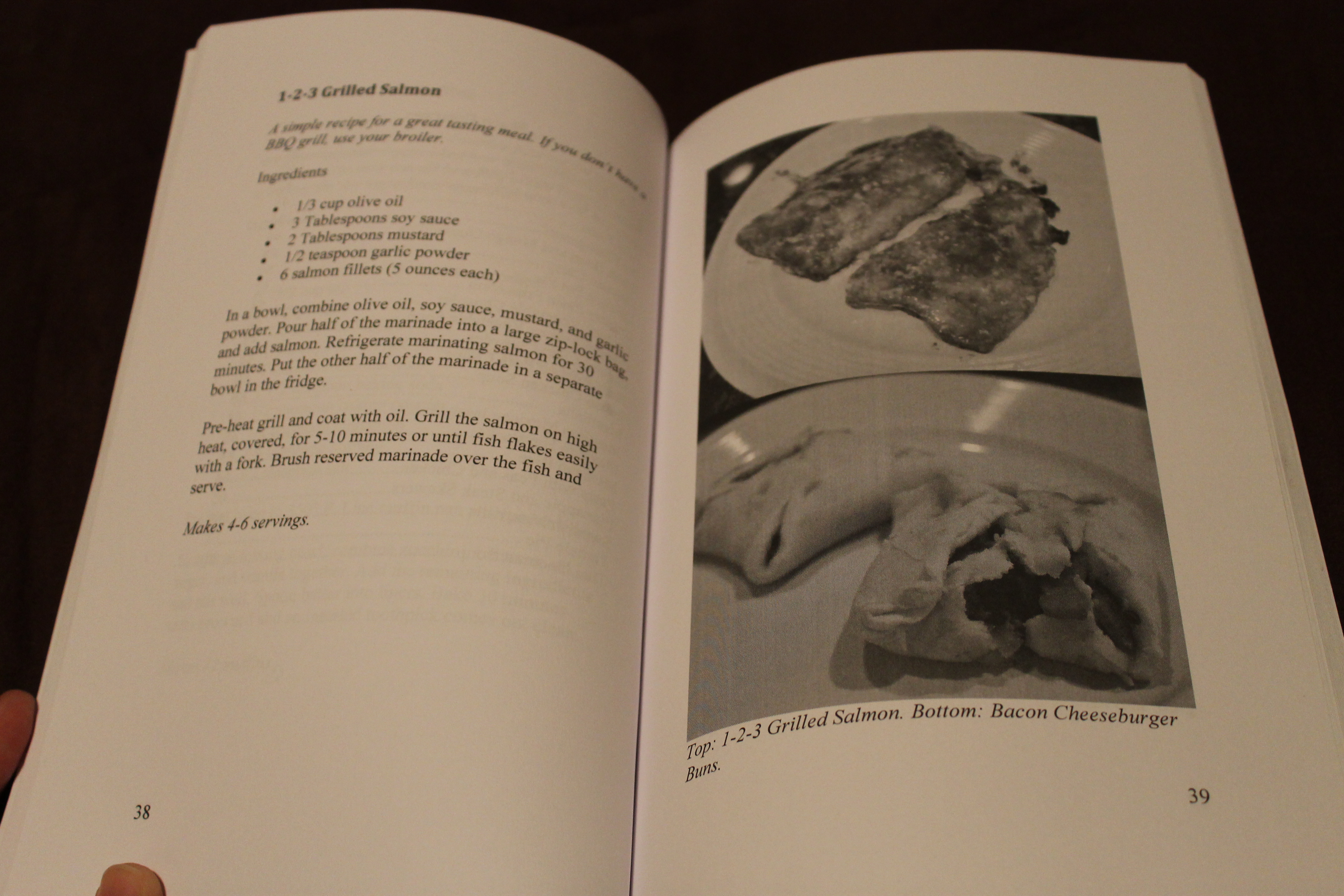
The print version is printed in black and white on 6″ x 9″ paper. Binding is normal book binding. It includes 8 pages of pictures. If you want to be able to see pictures of every recipe, I will send you a free copy of the e-book version if you give me proof of purchase of the print version. E-mail a copy of your receipt, or a picture of you holding the book to annaliese.lemmon@gmail.com
E-Book: $3.99 at Kindle, iBooks, nook, Kobo and Smashwords
This large file (over 7 MB) contains a color picture for every single recipe.
Description:
When Annaliese Lemmon’s son was diagnosed with allergies, she found that she would have to rebuild her recipe collection from scratch. So, for 2 ½ years, Annaliese Lemmon made a goal to test one allergy-friendly recipe a week and report the results on her blog The Rice of Life. Now, she has compiled over 70 of the best recipes from that effort into a cookbook for all to enjoy. It includes reader favorites such as:
- Homemade Cream of Chicken Soup
- Sweet Cornbread
- Muddy Buddies
- Chicken Flavored Rice and Pasta
- Creamy Pasta Primavera
- Sunbutter Rice Krispie Treats and
- Pumpkin Scones
as well as several all new recipes, all free from gluten, dairy, and nuts. Bon appétit!
Shared with Allergy-Free Wednesday, Gluten-Free Wednesday, and Hearth and Soul Hop
Cookbook Update
Wow, this has taken a lot longer than I thought. But for those who still get updates from my blog – I am nearing the final stages of completing this cookbook. All the recipes have been perfected. I’ve standardized them all to the same format (harder than it sounds, since my style evolved over 2 1/2 years keeping this blog). I created a cover for it, seen here.
Now, I have sent it out for a second pair of eyes to look over it to catch any typos I may have missed. Once it gets back, I will start formatting for a Print On Demand version through Create Space. When that is done, I will format the e-book. I am hoping it will be done by the end of September. Though as I’ve never formatted a print book before, or an e-book with so many pictures, there is a risk that it will be longer.
As a note, color printing is cost prohibitive, so the print version will only be available in black and white. The e-book will have color pictures of every single recipe, so regardless of where you purchase it from, I will provide a free copy of the e-book with each purchase of the print cookbook.
In the meantime, I have written another fantasy short story (unrelated to food allergies), called “Curelom Riders” that I have made available as an e-book. It is available for free at Amazon, Barnes and Noble, Apple, and Kobo. I hope you enjoy it! Here’s the description:
The king has been captured and sentenced to death, but Prince Omer isn’t ready to rule the Jaredites yet, let alone win a civil war. So he plans a rescue mission using the only way to reach the prison in time – riding across the sky on the backs of leathery-winged cureloms.
This 1,000 word flash fiction is a fantasy retelling of Ether 7:18.
Moving On
Three years ago, when I was watching Joseph break into hives after eating a crumb of zucchini bread made with sour cream, I didn’t think he would outgrow allergies as fast as he has. I knew studies that said outgrowing milk allergies occurs on average between 3-4. We’re there now, and he can tolerate baked milk and cheese. Other studies say that wheat allergy is often outgrown at age 7. Well, for the past couple weeks, he’s been eating wheat with no discernable effects.
We’re thrilled. But it does leave me wondering what to do with this blog. Joseph doesn’t care for straight cow’s milk, ice-cream, or yogurt, and he still can’t eat nuts. But that doesn’t seem to be enough to justify creating a new allergy-friendly recipe every week. So, I think its time to move on.
But given my success at creating an e-book of my short story, I do want to compile a cookbook of the best recipes from this blog and put it up as an e-book and in print on demand. It’s a lot more complicated than my short story, so I expect it will take a lot more time. I can’t say right now how long it will take me to format everything. Maybe a month or more. But I will post when everything is ready.
Thank you everyone for joining me on this journey. It has been a crazy, growing experience. Best of luck to all of you.
Hot Cross Buns Trial: Gluten-free, Dairy-free, Nut-free

 Those who have followed my blog for awhile know that I write fantasy stories for fun. Recently, I accomplished my life long goal of becoming a published author with my short story “Infant Insomnia.” It’s about a mother whose six-week-old daughter is failing to thrive. She uses her ability to see the future to try to figure out what she can do to save her baby. The answer is not related to allergies, but I used my experiences in dealing with Joseph’s allergies to convey the right emotions. Check out a free sample of my story on my writing blog.
To celebrate my story being available on Kindle, on Nook, on iBooks, and at Smashwords (for PDF, DOC, and HTML versions), I made some hot cross buns this week. The setting is based on an alternate 18th century London, so I wanted a British food, even though hot cross buns are traditionally made at Easter instead of February. I used the recipe from Annalise Roberts’ Gluten-Free Baking Classics
The Changes
I decided to make these dairy-free even though Joseph is tolerating baked milk now, so I subbed coconut milk 1:1 for regular milk. I also couldn’t find candied orange peel in my local store, so I had to go without. Next time, I’ll order some from Amazon.

The Method
Combine warm milk, yeast, 1 Tablespoon sweet rice flour, and 1 Tablespoon sugar. Cover with a towel and set aside for about 5 minutes until mixture becomes foamy.
Meanwhile, mix eggs and canola oil together in a small bowl and set aside.

In the bowl of your mixer, combine GF flour, xanthan gum, salt, remaining 1 Tablespoon sweet rice flour, and remaining 3 Tablespoons of sugar. Add milk and egg mixtures all at once and stir until combined. Then beat at high speed for about 3 minutes.

Mix in golden raisins. Spoon dough into greased cupcake pan. These were so full I probably should have made 12 instead of 10.

Cover and let rise 1 hour, until doubled. Bake at 375 degrees F for 20 minutes until golden brown. Remove from baking pan and let cool about 30 minutes.
In a small bowl, combine powdered sugar, milk, and vanilla until smooth and creamy. Spoon into a piping bag and pipe an “x” onto each bun.

Hot Cross Buns

Adapted from Gluten-Free Baking Classics
Gluten-free, Dairy-free, Nut-free
Dough Ingredients
- 1 cup coconut milk
- 2 1/4 teaspoons yeast (1 packet)
- 2 Tablespoons sweet rice flour, divided
- 1/4 cup sugar, divided
- 2 eggs
- 2 Tablespoons canola oil
- 1 3/4 cups brown rice flour blend
- 1 1/4 teaspoon xanthan gum
- 1/2 teaspoon salt
- 1/2 cup golden raisins
- 1/3 cup candied orange peel
Icing Ingredients
- 3/4 cup confectioner’s sugar
- 1 Tablespoon coconut milk
- 1/2 teaspoon vanilla extract
Warm the milk 30-60 seconds in the microwave (ideal temperature 110 degrees F). Add yeast, 1 Tablespoon sweet rice flour, and 1 Tablespoon sugar. Stir to combine, then cover and set aside for 5-10 minutes, until it becomes foamy.
Meanwhile, in a small bowl, beat together eggs and oil. In the bowl of your mixer, stir together brown rice flour blend, xanthan gum, salt, remaining 3 Tablespoons sugar, and remaining 1 Tablespoon sweet rice flour. Add milk and egg mixtures all at once to the flour, and beat until combined. Then beat at high speed for about 3 minutes until batter becomes thickened. Mix in raisins.
Spoon dough into a greased cupcake pan so each well is half full. Cover, and let rise in a warm place until buns have doubled and filled wells (about 1 hour).
Bake at 375 degrees F for about 20 minutes, until golden brown. Remove from pan and cool on a rack about 30 minutes.
Combine icing ingredients in a small bowl. Spoon into a pastry tube and pipe an “x” onto each bun.
Makes about 1 dozen buns
What I Thought
 I don’t remember what real hot cross buns are supposed to taste like, since we never really had them growing up, even though my mom is British. These were soft and springy, and quite nice. My husband liked them. Joseph only ate the top of one, and my daughter didn’t really touch hers. Oh well. It is my celebration.
“Infant Insomnia” available now: free sample | Kindle | Nook | iBooks | Smashwords
Shared on Gluten-free Wednesdays and Allergy-free Wednesdays
When Times Get Tough
My friends and I have been going through some tough times lately. Death, disability, pain, loss, its been everywhere. In the depths of her despair, my sister-in-law wrote a post about how God will give you more than you can handle, and it went viral. It’s actually a very uplifting article, because it highlights God’s promise to lift our burdens if we come to him. (Matt. 11: 28-30)
Of course, sometimes that lifting comes from taking away the burden, and other times we are strengthened to bear it. When we first learned of Joseph’s allergies, I pled in prayer that he would be healed. After many days, I felt the Spirit tell me “That is not my will.” So I changed my prayers to ask that I have the comfort, information, and ingenuity to be able to live with it. And that he has blessed me with in abundance.
I still don’t know why Joseph had so many problems. I do know that I have learned a lot from the experience. I continue to see that part of our purpose in life is to have sorrows, that we may learn empathy, and feel the full measure of joy. After all, the sweetest triumph comes after a lot of hard work.
If you are struggling, know that you’re not alone. That it is ok to cry and mourn. And I hope you find the help that you need.
Crescent Rolls: Gluten-free, Dairy-free, Nut-free

Unlike my First-try Friday posts, this recipe was perfected until I liked it.
Both sides of our family love rolls for big holiday meals. I felt bad that Joseph wouldn’t be able to enjoy something similar, so I went searching for a recipe, only to be disappointed by the unappetizing looking pictures in the results. So I decided to take the dough from the cinnamon roll recipe by Annalise Roberts and make it into a more savory roll.

The Method
Microwave half the milk for 1 minute, until it starts to boil. Add the rest of the milk to cool it down. stir in the yeast, sugar, and 1 Tablespoon sweet rice flour. Cover with a towel and set aside for 5 – 10 minutes until it becomes foamy. In a separate bowl, combine eggs and oil.

In the bowl of your mixer, mix together GF flour, xanthan gum, salt, and remaining sweet rice flour. Add milk and egg mixtures. Mix well with an electric mixer (about 3 minutes).

Divide dough into two sections (I only did half a recipe when taking these pictures, so there’s only one section.) Sandwich the dough between two sheets of parchment paper, and press the dough into a circle about 1/4″ thick. Use a pizza cutter to cut the circle into 8 wedges.

Take each wedge, and roll up, starting with the larger outside. Shape into a crescent, and place on a baking sheet. If the dough starts sticking to your hands, wash them to get any residual dough off.

Cover and let rise for 1 hour, or until doubled in size. Bake at 375 degrees F for 20 minutes, until light golden and cooked through.

Crescent Rolls
Gluten-free, Dairy-free, Nut-free
Ingredients
- ½ cup dairy-free milk, divided
- 1 tablespoon yeast
- ¼ cup sweet rice flour, divided
- 1 Tablespoon sugar
- 2 eggs
- 2 Tablespoons canola oil
- 1 ¾ cup brown rice flour blend
- 1 ¼ teaspoon xanthan gum
- ½ teaspoon salt
Microwave 1/4 cup of milk for 1 minute until it starts to boil. Add the remaining milk to it to cool it down, and stir in the yeast, sugar, and 1 Tablespoon sweet rice flour. Cover with a towel and set aside for 5 – 10 minutes until it becomes foamy.
In a separate bowl, combine eggs and oil.
In a third bowl, mix together GF flour, xanthan gum, salt, and remaining sweet rice flour. Add milk and egg mixtures. Mix well with an electric mixer (about 3 minutes)
Divide the dough into 2 sections. Sandwich each section of dough between two sheets of parchment paper. Roll and form into circles about 1/4″ thick. Use a pizza cutter to cut into 8 wedges for each circle. Roll each wedge from the bottom, curve into a crescent shape, then place on a baking sheet. Cover and let rise for an hour.
When done rising, bake at 375 for 20 minutes until light golden and cooked through.
Makes 16 rolls.
This recipe is featured in my cookbook The Best of the Rice of Life: Over 70 Gluten-free, Dairy-free, and Nut-free Recipes available now in print (Amazon, Create Space) and e-book (Kindle, iBooks, nook, Kobo and Smashwords).
Shared on Gluten-free Wednesday, Allergy-free Wednesday, Waste Not Want Not Wednesday, Full Plate Thursday, Pin It Thursday, Real Food Recipe Roundup, The Hearth and Soup Hop, and Gluten-free and DIY Tuesday
Chicken Curry Trial: Gluten-free, Dairy-free, Nut-free

I like looking through the best of recipe links on other blogs. That’s how I came across the Pakistani Kimi (Beef Curry) recipe from Whole New Mom. It looked good, so I decided to try it out this week.
The Changes
We’d had lots of beef recently, so I subbed chicken for the beef. I also cut down the amount of tomatoes, since we’re not that fond, and I didn’t want to deal with half a can. I also used garlic powder and didn’t use turmeric, because that’s what was in my pantry.

The Method
In a large skillet, saute onion until tender. Add chicken and cook thoroughly. Stir in curry, salt, and spices.

Add peas, tomatoes, and potatoes.

Bring to a boil. Reduce heat, cover, and simmer for 20 minutes, until potatoes are tender. Serve with rice.

Chicken Curry
Adapted from Whole New Mom
Gluten-free, Dairy-free, Nut-free
Ingredients
- 2 Tablespoons canola oil
- 1 medium onion, chopped
- 1 pound chicken, cubed
- 1 1/2 Tablespoons curry powder
- 1 teaspoon garlic powder
- 2 teaspoons salt
- 1/8 teaspoon pepper
- 1/8 teaspoon cinnamon
- 1/8 teaspoon ginger
- 1 14 ounce can of diced tomatoes
- 3 potatoes, peeled and diced
- 2 1/2 cups peas
Saute onion in oil until tender. Add chicken and cook thoroughly. Add curry powder, salt, and spices and stir until chicken is coated. Add tomatoes, potatoes, and peas. Bring to a boil. Reduce heat, cover, and simmer for 20 minutes, until potatoes are tender. Serve with rice.
Makes 6 servings
This recipe is featured in my cookbook The Best of the Rice of Life: Over 70 Gluten-free, Dairy-free, and Nut-free Recipes available now in print (Amazon, Create Space) and e-book (Kindle, iBooks, nook, Kobo and Smashwords).
What I Thought
This took longer to make than I thought it would. But I still quite liked the results. My husband would have liked it a bit “hotter” in flavor, but I like things mild. The kids were more interested in eating rice, but they could be persuaded to eat the chicken at least. I’m looking forward to eating the leftovers.
Shared on Gluten-free Wednesday and Allergy-free Wednesday
Latest Allergy Test
 Last week, Joseph saw the allergist for his semi-annual appointment. I told the doctor that since our last visit, Joseph has had no problems eating scrambled eggs, and is doing well with cheese and baked milk, so we wanted to see if he had outgrown those allergies especially.
With the results of the test, here are the doctor’s recommendations. The numbers next to the foods correspond with the labels on Joseph’s back.
- Try giving him wheat (3) and see if he reacts. The allergist is of the opinion that a lot of skin tests that are positive for wheat are false positives, related to hay fever.
- Avoid raw egg (4) (mayonnaise) and milk directly (5) but continue with baked milk and cheese.
- Avoid cashew (23)/pistachio family and walnut (21)/pecan (24) family.
- Almond (19) and hazelnut (20) now test negative, though were positive before. Although if you look at Joseph’s back, I would guess that the hazelnut and walnut wheals merged together, instead of having the entire wheal attributable to one.
- Avoid peanuts (25)
So this week, we have backed off on the milk testing and are giving Joseph wheat crackers. So far, I have not seen a reaction. Hooray! I have to say, I did not expect wheat to be the allergen that Joseph would outgrow first. I had hoped that he outgrew his milk allergies too, since he is no longer breaking out in hives, but he stops eating regular ice cream and cow’s milk after just a couple bites. I try to get him to say whether or not his tummy hurts with it, but I think I just confused him.
So what does this mean for the blog moving forward? I have a stock built up of gluten-free stuff to work through/give away, so I’ll keep doing some recipes, but it may be in the next few months I stop posting on this blog, as I don’t have to adjust our diets as much anymore.
For the curious, here are the numbers from Joseph’s test. And the results from May 2012 and November 2012. First number is the diameter of the wheal (raised bump) and second number is the diameter of the erythema (red flare)
- wheat: 5/10
- egg white: 3/10
- cow milk: 10/30
- almond: 0/0
- hazelnut: 0/0
- walnut: 40/55
- brazil nut: 0/0
- cashew: 35/50
- pecan: 20/40
- macadamia nut: 0/0
- pistachio: 32/50
- peanut: 10/30
- histamine (used as control): 5/30
- saline (used as control): 0/0
Crustless Spinach Quiche Trial: Gluten-free, Nut-free

After making the Curried Turkey Soup, I had a bunch of spinach leftover, so I went looking for a recipe to use it. I was originally planning on making a salad, and then I caught sight of a Crustless Spinach Quiche on Allrecipes.com. I hate making pie crust, gluten-free or not, so this idea intrigued me.
The Changes
We’re experimenting with baked milk, so I kept all the cheese as is. Everything else is already Joseph-safe. And I used fresh spinach instead of frozen since that’s what I had.

The Method
Saute onion in oil in a skillet until tender. Add spinach. Saute for a couple of minutes until wilted.

In a large bowl, whisk eggs together. Add cheese, salt, and pepper.

Add spinach mixture to egg mixture. Pour into a greased 9″ pie plate.

Bake at 350 degrees F for 30 minutes until eggs are set. Let cool for 10 minutes before cutting and serving.

Crustless Spinach Quiche
Adapted from Allrecipes.com
Gluten-free, Nut-free
Ingredients:
- 1 Tablespoon canola oil
- 1 medium onion, chopped
- 6 ounces fresh spinach, chopped
- 5 eggs
- 3 cups shredded Muenster cheese (1/2 pound)
- 1/4 teaspoon salt
- 1/8 teaspoon pepper
In a large skillet, saute onion in oil for a few minutes, until tender. Add spinach. Saute for another minute or two until spinach is wilted.
In a large bowl, whisk eggs together. Add cheese, salt and pepper, and mix until combined. Add spinach mixture. Stir until well mixed. Pour mixture into a greased 9″ pie plate. Bake at 350 degrees F for 30 minutes, until eggs are set.
Let cool for 10 minutes before cutting and serving.
Makes 4-6 servings
What I Thought
I quite liked the taste of this quiche, and was surprised with how well it held together without a crust. In fact, I didn’t even miss it. My husband agreed with me that it tasted good. My daughter and Joseph both only ate half of their pieces after a bit of prodding. I’d still do it again.
Entitlement and Fitting In
There’s an article going around facebook about raising kids without a sense of entitlement. I do agree that kids need to learn a good work ethic and not take things for granted. But there was one sign of entitlement that rubbed me wrong.
4. I want it because everyone else has it. My 7 year old has asked for an Elf on the Shelf every day this week. Why? Because she feels left out that many of her friends have one. And that’s awesome for them, but I don’t want that to be the focus of our season and I honestly don’t have time or energy to create things for the stuffed animal to do. The bottom line for us: it’s okay for you not to have what everyone else has. I asked my daughter, if everyone had a swimming pool, would you want one too? She said yes. Clearly, we are working on this one.
Of course she said yes! Look at us as adults. If everyone has an iPhone, or Fitbit, don’t you start to wonder if you aren’t missing out on something useful/enjoyable? xkcd points this logic out beautifully in one comic.
And then there are those with food allergies, who can’t have what everyone else has. If my son is somewhere and everyone else is eating and I have forgotten to provide him with an alternative, of course he’s going to feel left out. This pain is very valid and very real.
So what are we going to do about it? Parents can’t afford to buy every cool gadget kids want, and food allergic kids can’t eat what everyone else is eating without doing damage to their bodies. First, I think kids need to learn that everything has a cost. And not just monetarily – there’s time, health, and opportunity costs. Once kids understand this, they can judge for themselves if it is worth it.
Second, kids should learn to look beyond the fact that everybody has x to what is everybody getting out of x. Would our kids even get the same benefit out of it as everybody else? If x is unobtainable, then is it possible to find a substitute? If they are empowered to find a solution, that would build their confidence to take on bigger problems. I know that’s happened as I have found alternate recipes.
Third, and most importantly, kids (and everyone) need to learn to accept, and even celebrate differences. If a person is welcomed into the circle, the pain of feeling conspicuous due to lacking x lessens until it often vanishes completely.


 The Rice of Life